
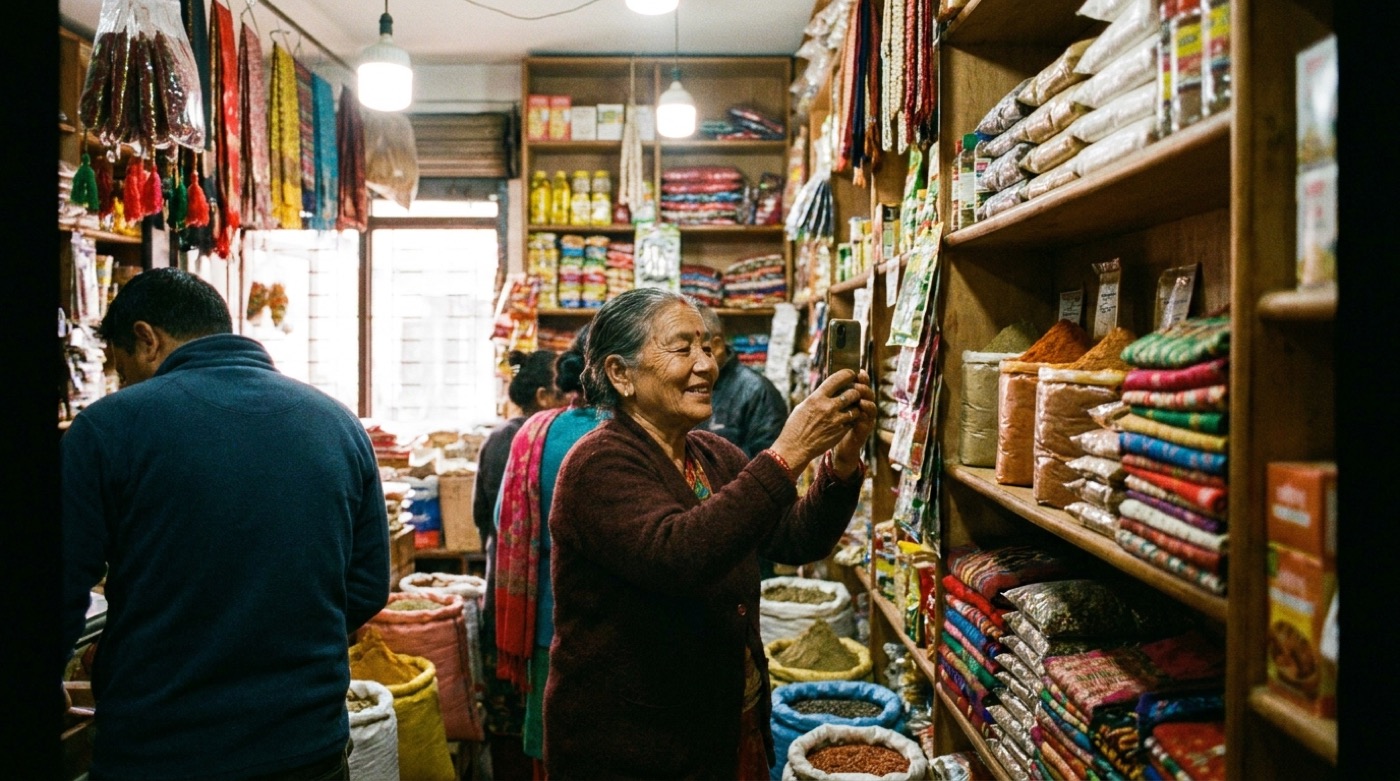
Walk down any shopping street in Kathmandu, Pokhara, or Biratnagar and you will see dozens of small retail shops selling almost the same products — shoes, electronics, home goods, cosmetics. What separates the busy ones from the quiet ones is increasingly not the product itself but how visible the shop is online. Retail marketing in Nepal has shifted heavily toward Facebook and Instagram over the last few years, simply because that is where local customers now spend time browsing before they decide where to buy.
Why retail marketing in Nepal works differently on Facebook vs Instagram
Facebook and Instagram serve different roles for a retail shop, even though many owners treat them the same. Facebook in Nepal still has a strong base of older and more local users, and it works well for community groups, local buy-and-sell pages, and boosted posts targeted by area. Instagram tends to reach a younger audience and rewards good visuals — clean product photos, short reels, and Stories. A shop that only uses one platform is leaving a chunk of potential customers unreached.
- Facebook: good for detailed posts, local marketplace groups, older customers, and location-based boosting.
- Instagram: good for visual product showcases, reels, and reaching a younger, trend-aware audience.
- Both: useful for direct messages, where a lot of Nepali retail buying now actually happens — customers ask about price and availability in the DMs before visiting.
What to actually post as a retail shop
Many shop owners post only when new stock arrives, then go quiet for weeks. A steadier approach keeps customers checking back.
- Post new arrivals as soon as they come in, with a clear photo, price, and available sizes or colors.
- Share a weekly "restock" or "back in stock" post for items that sold out — this reminds past interested customers.
- Post a short reel of the shop shelves or a "new collection" walkthrough once every week or two.
- Highlight a specific product each week with a close-up photo and a short honest description, rather than posting the entire inventory at once.
- Share customer photos (with permission) using your products, which builds more trust than shop-taken photos alone.
Always include the price in the caption or on the photo itself. A customer who has to DM just to ask "how much?" for every post is a customer you are losing to a shop that just tells them upfront.
Boosting posts to reach more local customers
Boosting a post — paying a small amount so Facebook or Instagram shows it to more people — is one of the fastest ways for a retail shop to reach new customers nearby. In Nepal, ad budgets can start as low as रु 1,000, and there is no extra management fee for budgets up to रु 5,000; above that, a 20% management fee typically applies if you want someone handling the targeting and optimization for you. A shop selling clothes in Patan, for example, could boost a post targeting people within a few kilometers who have shown interest in fashion — a small, targeted spend often outperforms a larger, untargeted one. Read more in our guide to Facebook and Instagram boosting in Nepal.
Handling DMs and comments without losing customers
A common problem for busy retail shops is slow replies. A customer asks about stock or price in the comments, does not hear back for hours, and buys from a competitor instead. Setting up simple automated first replies — confirming you have seen the message and sharing basic details like hours or delivery — can prevent this, especially during festival rushes. We cover the setup in AI auto-replies for Instagram and Facebook.
Seasonal pushes that matter for Nepali retail
Dashain and Tihar are the two biggest shopping seasons of the year for clothing, electronics, and home goods in Nepal, and a retail shop that plans content and offers around these festivals well in advance usually sees a real difference. The same applies, at a smaller scale, to wedding season and the Nepali New Year. Planning festival posts two to three weeks ahead — rather than scrambling the week of — gives your audience time to actually plan a visit.
Word of mouth still matters, even online
A lot of retail marketing in Nepal still travels through personal recommendation, even when it starts online. A customer who buys shoes and posts a happy photo tagging your shop reaches their own friends in a way your own posts never can. Encouraging this — by simply asking satisfied customers to tag your page, or by reposting their photos with thanks — turns your existing customers into a small, ongoing marketing channel at no extra cost.
Reviews work the same way. A shop with a handful of genuine, recent reviews on its Facebook page or Google Business Profile looks more trustworthy to a new customer than one with none at all. Politely asking a happy customer to leave a short review, right after a good interaction, is a small habit that compounds over months.
Beyond social posts: a website and payment options
Many retail shops in Nepal now benefit from a simple website that lists products and prices, even if most sales still happen in person or via DM — it adds credibility when a new customer looks the shop up. A basic website build costs रु 10,000 one-time, with रु 10,000/year hosting and रु 2,000/year for the domain. Accepting eSewa or Khalti alongside cash also removes friction for customers who prefer to pay digitally, especially younger shoppers.
If managing posts, boosting, and DMs on top of running the shop floor feels like too much, GrowthHub builds a full monthly content plan (12 static posts, 4 carousels, 4 videos) for रु 28,000, or handles posting and scheduling alone for रु 5,000/month. Start with a free audit of your shop's Facebook and Instagram pages and we will tell you exactly where customers are slipping through.
Frequently asked questions
Should a small retail shop use Facebook or Instagram in Nepal?
Ideally both — Facebook reaches an older, local audience well and supports location-based boosting, while Instagram works better for visual product discovery and a younger audience.
How much should a retail shop budget for Facebook ads in Nepal?
A starting budget of रु 1,000–5,000 targeted at a local area is enough to test what works before committing to a larger, ongoing ad spend.
Do I need a website if I already sell through Instagram and Facebook?
Not strictly required, but a simple website adds credibility for new customers checking your shop for the first time and can list your full catalog and prices in one place.
🛍️ See our retail & local brands marketing →
Related articles.

How to Choose a Digital Marketing Agency in Nepal
What to actually look for when hiring a digital marketing agency in Nepal, from real deliverables to fair pricing, without the sales talk.
Read article →
Social Media Marketing in Nepal: A Practical Guide
Everything a busy Nepali business owner needs to get started with social media marketing, from choosing platforms to planning a month of content.
Read article →
AI Marketing for Nepali Businesses: A Practical Starting Point
A grounded look at how AI marketing actually helps Nepali businesses today, without the hype, plus what still needs a human touch.
Read article →