
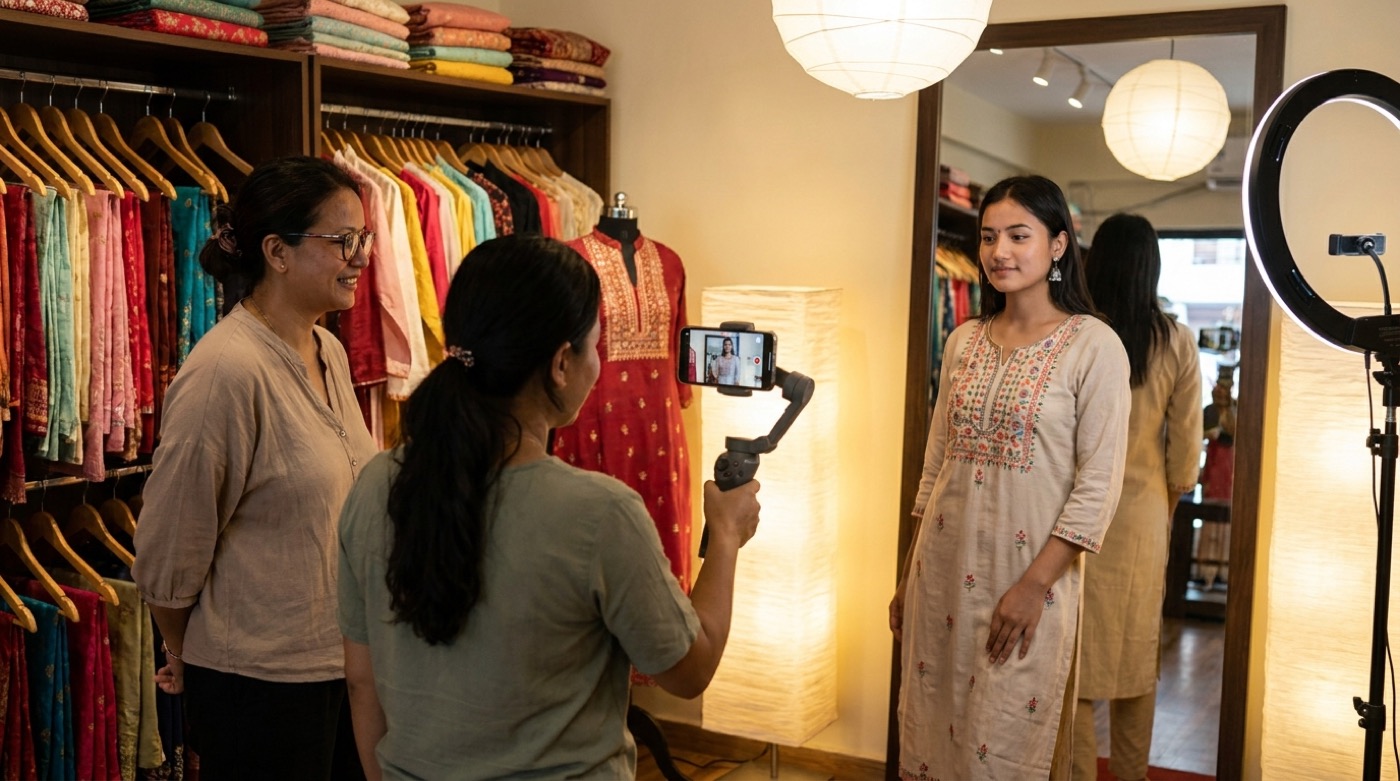
A clothing boutique lives and dies by how good the clothes look in photos, but most boutique owners in Nepal underuse this advantage. Clothing boutique marketing is not about posting every piece of stock the moment it arrives — it is about showing outfits in a way that makes someone picture themselves wearing it. That shift, from "product photo" to "styled photo," is usually the single biggest improvement a boutique can make to its social media.
Clothing boutique marketing that sells the outfit, not just the item
A plain photo of a kurta on a hanger tells a customer what it looks like. A photo of that same kurta styled with matching accessories, paired with shoes, and photographed on a person or a good mannequin tells the customer how it could look on them. If your boutique currently posts flat-lay or hanger photos only, this is the fastest change to make.
- Full outfit styling: pair a top with bottoms, accessories, and shoes in one photo, and mention where to find each piece.
- Try-on reels: a quick 10–15 second reel of a staff member or model trying on a new arrival, showing how it moves and fits.
- Size and fit guidance: a short caption or Story noting who the piece runs true to size for, which reduces returns and DMs asking about fit.
- "Get the look" carousels: three or four outfit combinations built entirely from your current stock.
- Customer styling requests: post a "help me style this for a wedding" type question in your Stories, and answer with a follow-up outfit post.
Accessorizing and cross-selling in the same post
A styled outfit post is also a natural place to sell more than one item at a time. If a kurta is paired with a matching bag and earrings in the photo, mention all three pieces and their prices in the caption, rather than only the main item. Many customers who came for one thing end up asking about the accessories too, once they see how the full look comes together — a small habit that quietly increases the average sale without any extra advertising spend.
Festival and wedding season collections
Dashain, Tihar, and wedding season are the biggest sales windows for most Nepali boutiques. Planning a themed collection post — a Dashain edit, a Tihar-ready outfit set, or a wedding guest lookbook — two to three weeks ahead of the season gives customers time to browse, ask questions, and actually plan their purchase, instead of trying to catch last-minute shoppers with a single post the week of the festival.
Photograph your festival collection against a simple, uncluttered background (a plain wall or curtain) so the outfit stays the focus — busy backgrounds compete with the clothing for attention.
Reels: the format most boutiques are still ignoring
Static photos still matter, but reels reach far more new people because Instagram actively shows them to users who do not yet follow your boutique. A simple reel does not need to be elaborate — a person walking toward the camera in an outfit, a quick spin to show movement, or a "3 ways to style this one piece" video all perform well and take under twenty minutes to shoot with a phone.
Using Facebook and Instagram together for a boutique
Instagram tends to work best for the visual styling content described above, while Facebook is useful for detailed posts about sizing, return policy, or a full price list, and for reaching a slightly older, local audience through boosted posts. A boutique that only uses Instagram is often missing the Facebook shoppers who prefer to browse and message on that platform instead. For a broader look at how the two platforms work together for retail, see retail shop marketing on Facebook and Instagram in Nepal.
Boosting your best outfit posts
Rather than boosting every post, pick your best-performing outfit post from the week — the one with the most saves, shares, or comments — and put a small budget behind it, starting from रु 1,000. Target women or men in your city within your typical customer age range. This concentrates your budget on content that has already proven it resonates, rather than spreading it thin across everything you post.
Working with local models or micro-influencers
You do not need a well-known influencer to make outfit content look aspirational. A friend, a regular customer with a good sense of style, or a local college student willing to model in exchange for the outfit itself can often produce content that looks more genuine than a staged studio shoot. For example, a boutique in Jhamsikhel could invite two or three regular customers to model a new collection for an afternoon in exchange for a couple of free pieces — a low-cost way to get a range of body types and styles represented, which also tends to resonate better with a wider range of shoppers than a single in-house model.
Handling sizing questions without losing the sale
A huge share of boutique DMs are simply "Do you have this in size M?" or "Is this available in another color?" Slow replies here are one of the most common reasons a boutique loses a sale to a competitor page. A short, clear size chart pinned in your Instagram highlights, along with a fast reply system for common questions, closes this gap quickly.
If shooting, styling, editing, and posting for your boutique every week is eating into the time you should be spending with customers in the shop, GrowthHub can take it over. Our team designs static posts and carousels at रु 1,000 each and styled reels at रु 3,000 each, or a full monthly plan at रु 28,000 covering 12 static posts, 4 carousels, and 4 videos. Start with a free audit of your boutique's current Instagram and Facebook pages to see where the biggest gaps are.
Frequently asked questions
What kind of photos work best for clothing boutique marketing?
Styled outfit photos that pair a piece with accessories or other clothing tend to perform better than plain hanger or flat-lay shots, since they help customers picture themselves wearing the outfit.
How early should a boutique start posting Dashain or wedding season content?
Two to three weeks before the season gives customers enough time to browse, ask sizing questions, and plan their purchase instead of rushing at the last minute.
Is it worth boosting every boutique post?
No — it is usually more effective to boost only your best-performing post from the week with a small, targeted budget rather than spreading money across every post.
🛍️ See our retail & local brands marketing →
Related articles.

How to Choose a Digital Marketing Agency in Nepal
What to actually look for when hiring a digital marketing agency in Nepal, from real deliverables to fair pricing, without the sales talk.
Read article →
Social Media Marketing in Nepal: A Practical Guide
Everything a busy Nepali business owner needs to get started with social media marketing, from choosing platforms to planning a month of content.
Read article →
AI Marketing for Nepali Businesses: A Practical Starting Point
A grounded look at how AI marketing actually helps Nepali businesses today, without the hype, plus what still needs a human touch.
Read article →